
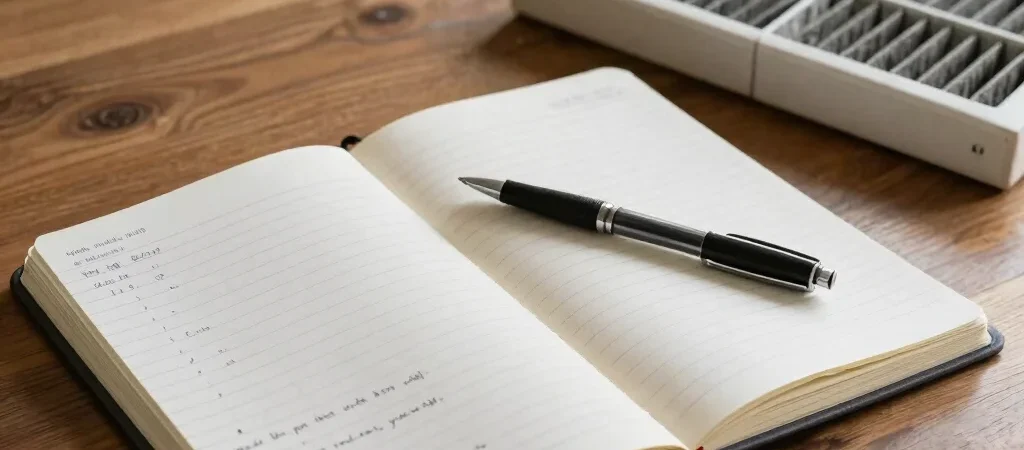
A filter is replaced, a tap begins to drip, and a smoke alarm gives a brief chirp—but the details are easy to forget by the next season. A home maintenance log gives those small events somewhere to go. It does not need to be a spreadsheet or an app; it needs enough information to make the next decision clearer.
Record the basics
For each entry, note the date, the location, and what happened or was done. Add a model number, part name, or contractor contact only when it will help you find the same item or service again. “Hallway smoke alarm tested” is more useful than a note that says only “alarm.”
Separate tasks from observations
Mark whether an entry describes completed work, a recurring task, or a problem you are watching. That distinction keeps a small stain on the ceiling from looking like a repair that is already finished. If you are not sure what caused an issue, record what you observed without guessing at the explanation.
Choose a format you will revisit
A notebook kept with household papers, a basic document, or a notes app can all work. Choose one place, and make it easy to add a line when something happens. If you share home responsibilities, agree on where the record lives so two people are not keeping separate versions.
Let the log answer questions
When a familiar issue returns, the record can show when it first appeared and what was tried before. That context may help you explain the situation to a qualified repair professional or decide what information to gather next. Start with one entry today; a useful log grows through small notes, not a perfect setup.